
Why Facebook and Instagram work for roofers
Most homeowners don't search for a roofer until something is already wrong. By then they're calling three companies from Google and picking the cheapest. Facebook and Instagram reach them earlier: the homeowner with a 20-year-old roof, the one who noticed a stain after the last storm, the one who's been meaning to get the gutters looked at.
That makes Meta a good partner to Google, not a replacement. Google catches people who are ready to call today. Meta builds the pipeline of people who will be ready next month, in your area, before your competitors reach them.
The roofing ads we run
We build each campaign around a few clear angles and keep testing new ones. Angles we build around for roofers:
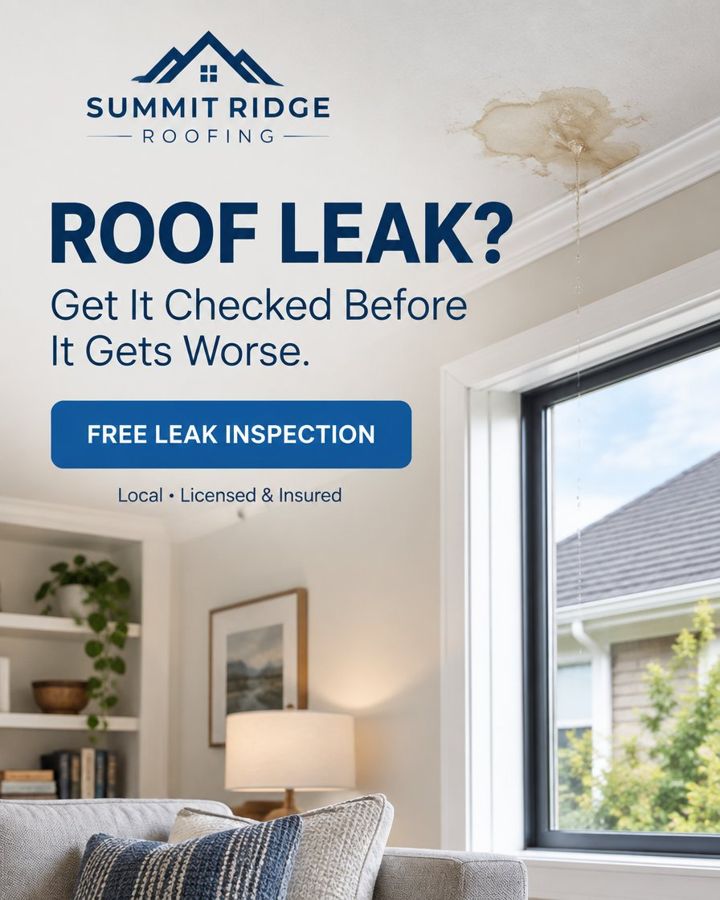
Leak and damage
"Roof leak? Get it checked before it gets worse." Urgent, visual and easy to act on.
Storm response
After hail or high wind in your area: free inspections for damage you can't see from the ground.
Roof age
"How old is your roof?" Speaks to the homeowner who knows a replacement is coming.
Price clarity
A starting price or a typical range. Homeowners respond to roofers who aren't cagey about cost.
Before the season
Before winter, before hurricane season, before the spring rains. A deadline gives people a reason to act now.
Your real work
Your own job photos, your crew, your reviews. Real proof beats anything polished.
You approve every ad before it runs. When an ad shows a finished roof, it's a roof you actually did. See more in roofing Facebook ad examples.
Roofing ads by season
Roofing demand follows the weather, so the ads should too. A rough calendar we adjust for each market:
The rules roofing ads have to follow
A lot of roofing ads get rejected or limited because of rules most marketers don't know. We build around them from day one:
- Meta's housing category. Meta lists "housing repairs" in its housing special ad category, which limits targeting (no age or zip-code targeting, wider location radius). We set campaigns up to fit those limits instead of fighting them.
- Financing wording. Phrases like "0% financing" or "no payments for 12 months" put an ad in Meta's financial services category. We keep financing out of the ad and handle it on the call.
- Insurance deductibles. Several states, including Texas and Colorado, ban roofers from waiving or rebating insurance deductibles. We never run "we'll cover your deductible" offers.
- Honest proof. No fake reviews, no stock photos passed off as your work, no invented numbers.
The full explanation: Meta's housing ad category for roofers.
Lead forms, follow-up and tracking
Our roofing campaigns use Meta's built-in lead form: the homeowner taps the ad, their name and phone are already filled in, and they answer two or three quick questions about the job. No website needed, and it often costs less per lead than sending people to a landing page.
The catch with easy forms is that the leads go cold fast. So every new lead is sent to you by text or email and added to your lead tracker, with a to-do list of who still needs a call. Speed matters: the sooner you call, the more likely they pick up and book. Here's a follow-up routine you can copy.
Each month you see what you spent, how many leads came in, what each cost, and which ads brought them in.
Budget and cost per lead
Ad spend is separate from our fee and goes straight to Meta on your card. We recommend starting at $75 to $150 a day per location. Below that, Meta's system struggles to learn who your buyers are; it works best with around 50 results a week per ad set.
Industry estimates put roofing leads from Facebook at roughly $40 to $80 each, with a wider $40 to $120 range depending on market and offer, and much cheaper leads right after a storm. Your numbers depend on your area, your offer and your follow-up. For the full math, read how much Facebook ads cost for roofers.
Our own test: in our own Meta campaign selling to roofing companies (Sep 23 to Oct 8, 2026), one ad brought in leads for about $35 each while the other five cost $75 or more. Those were business leads, not homeowner leads, but the gap between ads in the same campaign is why we never stop testing.